Javan Endemic Species Programme
Contact
  • About JESP
    • The team
  • JES projects
    • Bawean warty pig conservation
    • Education material
  • News
    • Newsletter
    • JESP publications
  • Support us
    • Donate
    • Volunteering
    • JES Nature Travel
  • Contact
  • Thank you!
  • Bahasa Indonesia

BEKI: Saving the rarest pig species of the world!

BEKI stands for Bawean Endemik Konservasi Initiatif - in English: Bawean Endemics Conservation Initiative. The project focusses on the Bawean warty pig, but its conservation efforts support the protection of all wildlife and nature on Bawean, and island 150 km off the coast of East Java. The project was initiated by the student Mark Rademaker in 2013 and has been jointly developed by Mark and Johanna into a interdisciplinary conservation project that will be launched in November 2014. 

Bild

Bild

What are Bawean warty pigs and why are they threatened?
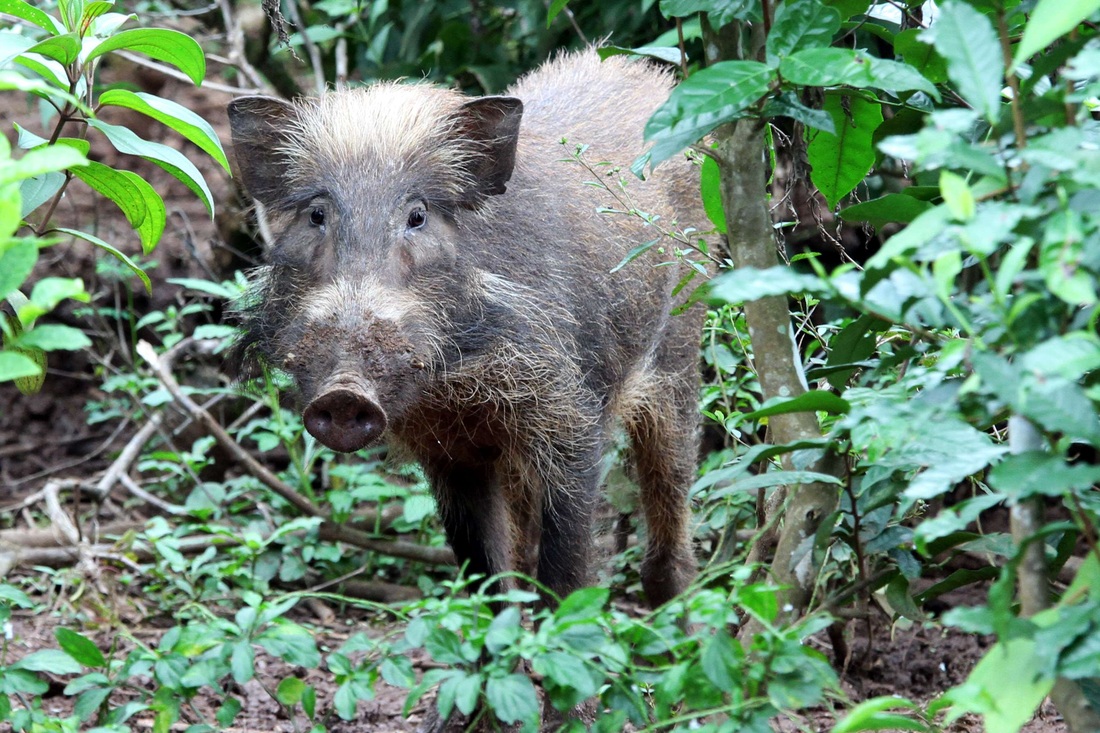
Bawean warty pigs are possibly the rarest pig species in the world. They are very little known, but due to their restricted occurrence on this tiny island they are highly threatened by extinction. There is not much forest left on the island, and the pigs destroy the local farmers' fields in search for food. Consequently, the farmers hunt and kill the pigs to protect their livelihoods. The European wild pig live on the island as well, and competes with warty pigs for habitat and food. Bawean warty pigs are closely related to Javan warty pigs that occur on the main island of Java. It is still unknown how closely they are related.  


Aims of BEKI
BEKI has two main parts: one part focusses on the Bawean warty pigs in the wild and explores the threat and socioeconomic background of hunting, the other part studies animals in captivity that have been rescued by Cikananga Rescue Center.
A. On Bawean island we:
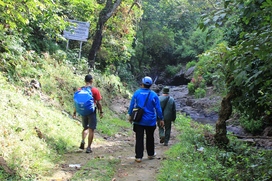
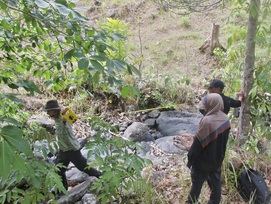
- Explore the unknown population numbers, behavior and ecology of Bawean warty pigs by using camera trapping and line transects
- Collect data about the habitat where the animals are encountered to study their ecological needs
- Install camera traps at crop-raiding sites to investigate details about crop-raiding by pigs
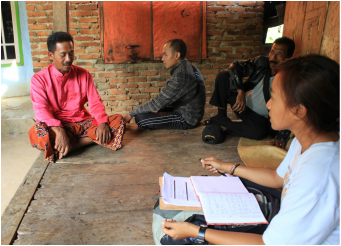
- Conduct interviews in the local communities to find out the attitude of people towards wildlife and what damage wild animals and especially pigs to the livelihood of pigs
- Discuss with the local people what effective measures can be taken to protect crops that do not harm the pigs
- Conduct awareness and education measures to improve the general attitude towards wildlife and nature, and support the development of local pride of Bawean's endemic species
B. At Cikananga Wildlife Center we:
- Observe the behavior of rescued warty pigs and compare it to the behavior of their wild relatives in order to give recommendations for effective reintroduction planning

Bild
Bild
Bild

The team
The team consists of the students Mark Rademaker and Simen Blokland, the Indonesian biologist Shafia Zahra, and the researcher Johanna Rode-Margono. We train and employ two forest guides, and work closely together with Mr. Nursyamsi, the head of the island's Nature Reserve. Our Indonesian research counterpart is Mr. Gono Semiadi from the Indonesian Institute of Sciences, an expert in Indonesian mammalian wildlife.

Bild

Our approach
We believe that conservation must be done in close cooperation with local people. Ultimately, only they can protect "their" natural heritage. By employing local people and offering stipends to Indonesian students, we empower them to engage for conservation. We also believe that international networking between conservationists and scientists and between different disciplines is a key to the success of projects like this. Finally, we always try to make our results available - not only to other scientists, but also to practitioners, local authorities, and last but not least the local people and the public.

Powered by Create your own unique website with customizable templates.